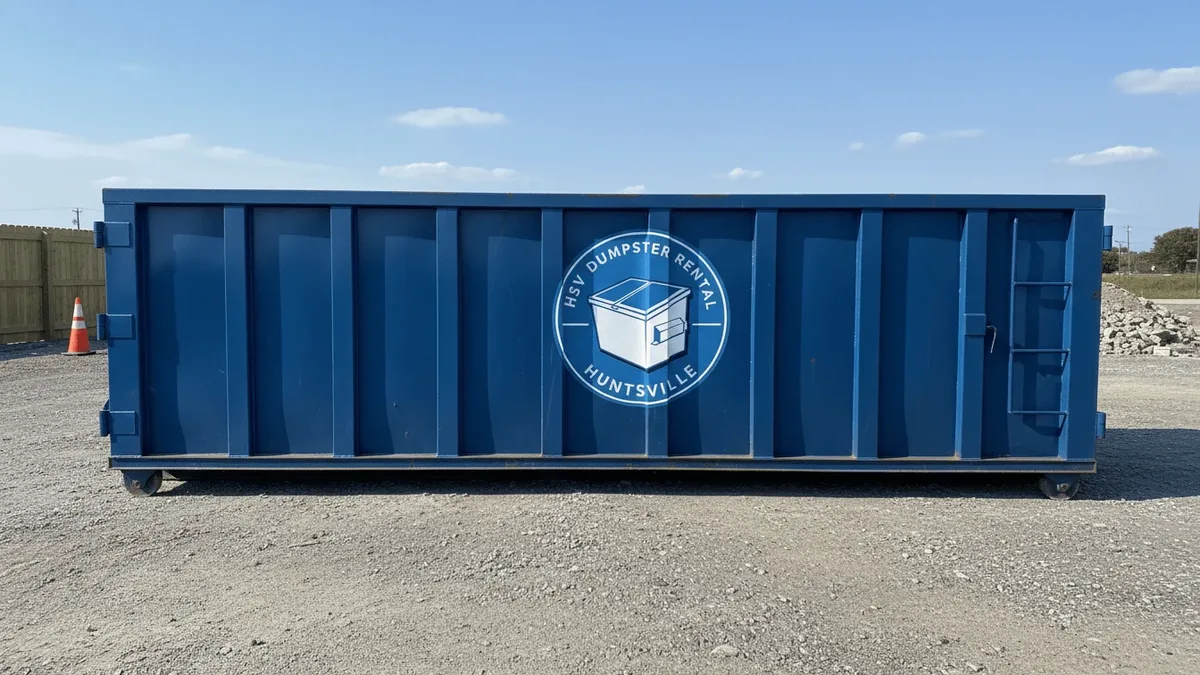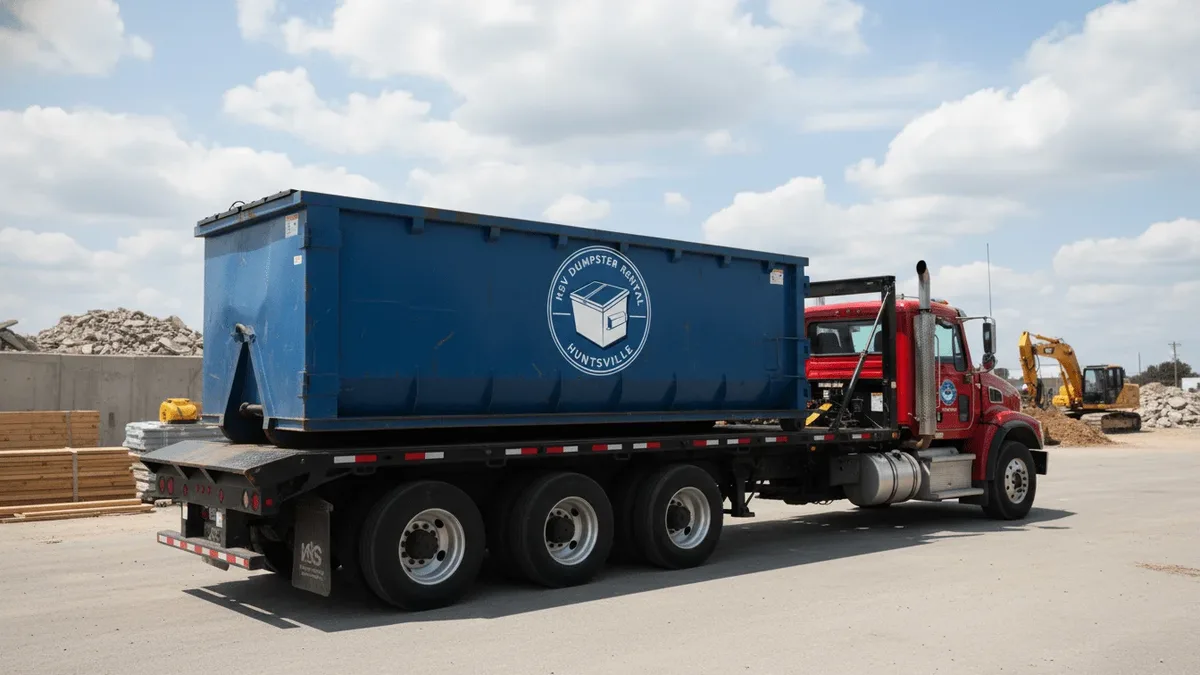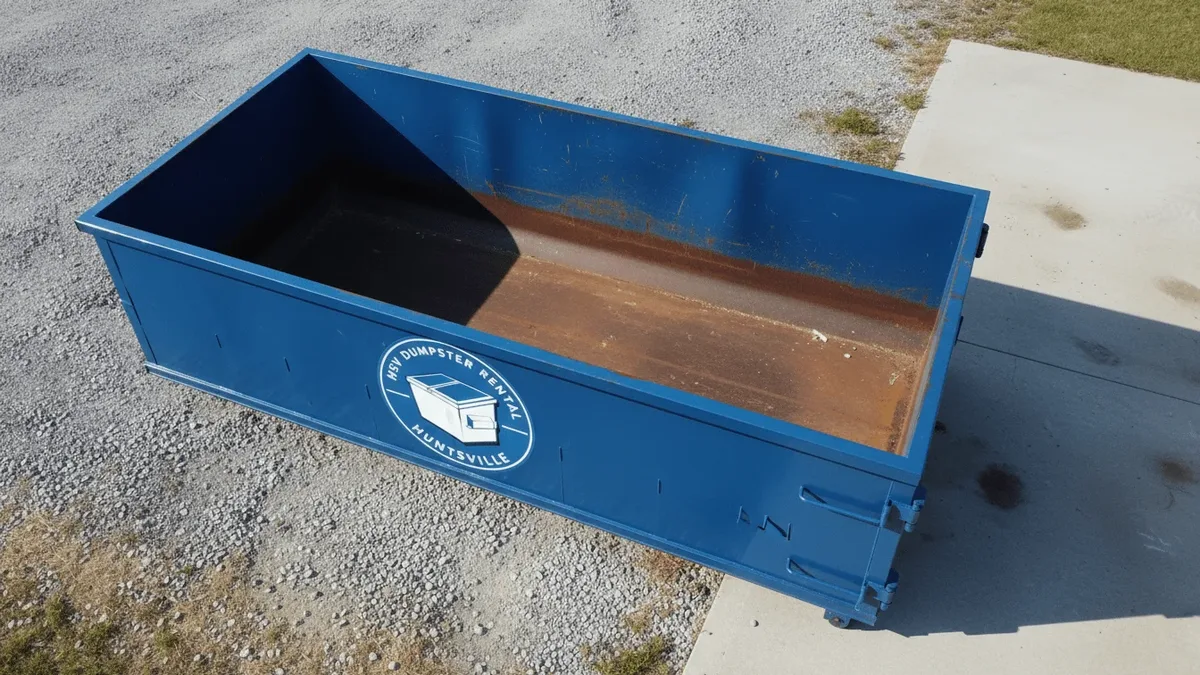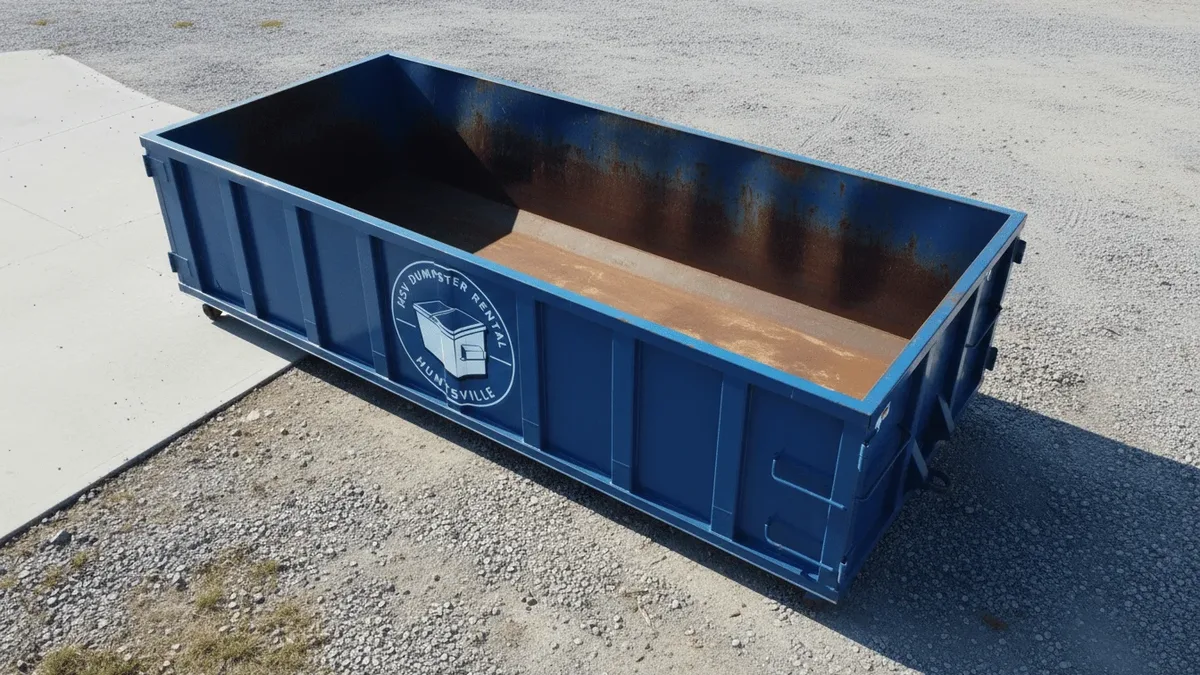
Most of what comes out of a home cleanout, remodel, or job site is exactly what a roll-off dumpster is built for — furniture, drywall, flooring, cardboard, general construction debris, yard waste, and everyday household junk. But a handful of materials are restricted or prohibited, either because Alabama's solid waste rules don't allow them in a general debris load or because a receiving landfill simply won't accept them. Knowing the difference before loading day keeps your project moving and avoids a container that gets flagged at the transfer station. Here's the honest rundown.
What Goes In Without Any Issue
General household junk, furniture, cardboard and packaging, carpet and flooring, drywall, wood and lumber, non-hazardous construction and demolition debris, and yard waste can all go straight into a standard roll-off. This covers the large majority of residential cleanouts, estate cleanouts, and remodel projects without any special handling. If you're working through an junk removal job or a whole-house declutter, you can load these items with confidence.
Electronics: Not Illegal, But Best Kept Out of the Load
Here's a point of confusion worth clearing up directly: Alabama does not have a statewide law banning TVs, computers, or monitors from landfills the way some other states do. There's no legal prohibition on electronics ending up in general waste in Alabama. That said, most landfills that receive dumpster loads simply won't accept electronics mixed in with general debris as a practical matter of their own operating rules, and electronics contain materials — lead, mercury, various metals — that are genuinely better off recycled than buried. The state runs a voluntary program called E-Cycle Alabama, coordinated through ADEM, that connects residents and businesses with certified e-waste recyclers. Our practical advice: route old TVs, monitors, computers, and similar electronics to a certified e-waste recycler rather than tossing them in the container, since it's the more responsible option and avoids a load getting rejected at disposal. Our Huntsville and Madison County recycling guide has more on local drop-off options.
Restricted Under Alabama's Solid Waste Rules
A handful of materials are genuinely restricted from general debris disposal under ADEM's solid waste regulations and, for tires specifically, Alabama's Waste Tire Recycling Act:
- Tires — whole tires are restricted from general landfill disposal under the Waste Tire Recycling Act and need to go to a tire retailer or dedicated tire recycling point instead.
- Lead-acid batteries (car and marine batteries) — these are restricted from general disposal; most auto parts retailers accept them for recycling, often at no cost.
- Used motor oil — oil is a restricted material under ADEM's rules and should go to a used-oil collection point rather than into a container.
- Paint, fuel, and other household or automotive chemicals — liquid paint, gasoline, solvents, and similar chemicals fall under hazardous and restricted-waste handling and shouldn't be poured out or bagged into a roll-off load.
If your project is going to generate any of these — a garage cleanout with old car batteries, a shop cleanout with cans of paint and solvent — mention it on your call so we can point you toward the right disposal option instead of a mixed load that could get flagged.
Asbestos: Never, Under Any Circumstance
Asbestos-containing material never goes into a roll-off dumpster, full stop — not partially, not bagged, not “just a little.” It requires specialized abatement handling and disposal regardless of the quantity involved. This is especially relevant for older homes around Huntsville, including some of the historic housing stock near Twickenham and Old Town, where older insulation, floor tile, or roofing material may contain asbestos. If you suspect a renovation or demolition project might involve it, that's a conversation for a licensed abatement contractor before any container gets ordered — not something to test by putting a piece in the dumpster and seeing what happens.
A Few Other Things to Flag Before Loading Day
Large appliances containing refrigerants (refrigerators, freezers, some air conditioners) often need refrigerant recovery before disposal — let us know if these are part of your load. Propane tanks, of any size, shouldn't go in a container either, since they're a safety hazard for the crew handling the load; most hardware stores and propane retailers offer tank exchange or disposal. When in doubt about any specific item, a quick question on your booking call is faster and safer than guessing.
When You're Not Sure, Ask Before You Load
The list above covers the items that come up most often, but every project is a little different — especially demolition and construction jobs that can turn up unexpected material. If you're planning a demolition or construction dumpster rental project and aren't sure what you'll run into, our guide to construction debris disposal covers common job-site material. Otherwise, the fastest way to a straight answer is a phone call before delivery day. Call HSV Dumpster Rental Huntsville at (938) 666-6548 and describe what you're clearing out — we'll tell you plainly what can go in the container and what needs a different path.